
General Nutrition and CancerFebruary 5, 2020
Marisa Soski, ND, MS
One of our favorite things to talk to patients about is the role of nutrition in cancer care, which has certainly changed over the years. For a long time, many oncologists thought that diet and nutrition did not matter and had no effect on a patient’s health or outcomes. This belief is starting to change as doctors begin to recognize the importance and role of a healthy diet. On the other side of the spectrum you have people like Chris Wark from Chris Beat Cancer who claim that diet and lifestyle changes alone can cure cancer. We believe the role of nutrition is somewhere in the middle, it is likely not a silver bullet for most people, but it can have a significant impact on overall health.
Some areas that proper nutrition can help in include:
The focus of conventional medicine with respect to cancer is the maintenance of body weight and BMI as this can significantly impact outcomes, but what if we took it a step further and focused not just on maintaining weight but incorporating healthy and cancer fighting foods?
One important thing to point out is that there is not one diet that works best for everyone. For example, while one person may feel incredible on a completely plant-based diet, another person may feel depleted and that they can never quite get all the nutrients they need. It is important to experiment and find the diet that works best of you.
Here are some general rules that mostly good for everyone
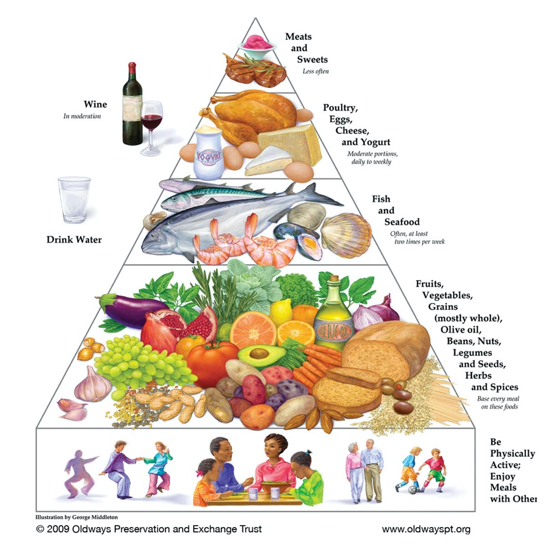
In general, the diet with some of the best research to support its cancer fighting ability is the Mediterranean diet (see the food pyramid below) which focuses on whole foods, lots of fruits and veggies, legumes, fish, some lean meat, and whole grains. Additionally, the pyramid stresses the importance of daily movement, water, and community.
As a final note we want to leave you with this: making dietary changes can be very hard for a number of reasons including time, money, energy, cultural traditions, and emotional ties to food. Therefore, be kind to yourself when making changes to the ways you eat. Start slow, making small changes at a time. Making changes in this way is more likely to lead to sustainable change than a complete overnight overhaul. Food should not be a source of added stress, but rather a form of empowerment that you are taking healthy steps to achieve your optimum health.
doi: 10.1016/j.critrevonc.2013.03.006. doi:10.21873/cgp.20050
< Return to Sage Advice Blog Main Page |
  |