Sage Advice Blog
May 19, 2020
Marisa Soski, ND, MS
One of the hallmarks of solid tumors/cancers is a low oxygen cellular environment, scientifically called hypoxia. (Hypo = low, oxia = oxygen) Hypoxia typically causes cell death, such as in the case of a stroke or pulmonary embolism, but cancer cells have adapted to survive and thrive in these situations. Some of the concerning effects of hypoxia in relation to cancer include:
Angiogenesis – the formation of new blood vessels to bring nutrients to the tumor
Alterations ...
March 13, 2020
Marisa Soski, ND, MS
Medicinal mushrooms are a potent medicine that we recommend to many patients. These include mushrooms such as Lingzhi (Ganoderma lucidum), Chaga (Inonotus obliquus), Lion’s mane (Hericium erinaceus), Turkey Tail (Trametes of Coriolus versicolor), Shiitake (Lentinula edodes), Maitake or Hen-of-the-Wood (Grifola frondosa), and more! These medicinal mushrooms have many anti-cancer actions including inhibition of many cancer promoting molecular pathways and boosting ...
February 19, 2020
Marisa Soski, ND, MS
“In every walk in with nature one receives far more than he seeks” - John Muir
I’m sure that you’ve heard that getting out into nature is good for you, but maybe you don’t know why? There are many, many reasons including lowering blood pressure and stress hormone levels, reducing nervous system arousal, enhanced immune system function, increased self-esteem, reduced anxiety, and improved mood. The research on this topic is continuing ...
February 5, 2020
Marisa Soski, ND, MS
One of our favorite things to talk to patients about is the role of nutrition in cancer care, which has certainly changed over the years. For a long time, many oncologists thought that diet and nutrition did not matter and had no effect on a patient’s health or outcomes. This belief is starting to change as doctors begin to recognize the importance and role of a healthy diet. On the other side of the spectrum you have people like Chris Wark from Chris Beat Cancer ...
December 12, 2019
Marisa Soski, ND, MS
Cancer cells often adapt and develop new ways of evading the body’s immune system in an attempt to continue carrying on their un-checked growth and proliferation. One way they do this is to express inhibitory receptors, such as PD-1, Lag-3, Tim-3, BTLA, and CTLA4, which help hide the cells from the immune system’s T-cells whose role is to find and eliminate cancer cells. These receptors have become targets for a growing group of conventional therapies called ...
October 24, 2019
Marisa Soski, ND, MS
Background on Mistletoe Therapy
Now you may be thinking: “Mistletoe, like the one you kiss under on Christmas?” Well, no, not exactly. This mistletoe is a different species whose Latin name is Viscum album (European mistletoe). Mistletoe has been used as medicine since roughly 300 BCE as a cure-all for many conditions. In modern history, mistletoe has become a potent adjunctive anti-cancer therapy. This use was pioneered by Rudolf Steiner in the early 1920’s, ...
March 14, 2019
Alex Speers ND, MS
The first few days after a major surgery can be a difficult period for patients with cancer and as naturopathic doctors, we are always on the search for natural products to help patients during this time. Our options are often limited however because in a hospital setting, access to dietary supplements is more closely regulated than if the patient were at home. Therefore, the ideal post-surgical recommendation from a naturopathic perspective would be something that is simple, ...
February 19, 2019
Alex Speers ND, MS
When making dietary recommendations to patients with cancer, naturopathic doctors often emphasize whole foods as part of their overall treatment plan. Whole foods have been minimally processed or refined and are free from additives and other artificial substances. Organic fruits, vegetables, nuts, and whole grains are all examples of whole foods, each densely packed with a variety of beneficial nutrients.
On ...
January 17, 2019
Alex Speers ND, MS
In the past few years, fasting has gained a considerable amount of interest among patients with cancer. Pre-clinical data and some early human data have suggested that fasting around chemotherapy may reduce the incidence and severity of treatment-related side effects and currently, there are several clinical trials being conducted to investigate this question. While the combination of fasting with conventional treatments is an intriguing idea and has received the greatest ...
August 9, 2018
Alex Speers ND, MS
Two weeks ago, a new study was published that made a lot of headlines in the world of oncology. The study suggested that for patients with colon cancer, drinking diet soda could decrease their risk of cancer recurrence and their risk of dying from colon cancer. As a naturopathic doctor who is always trying to steer patients toward more whole foods, these findings came as a bit of a shock. Could the next big anti-cancer diet craze really be carbonated water with a sprinkling ...
March 23, 2018
Alex Speers ND, MS
Fatigue is considered the most common cancer-related side effect, with some studies reporting fatigue being present in 75-99% of patients with cancer. Unlike some cancer treatment-related side effects such as nausea, cognitive impairment, hair loss, or appetite changes, fatigue is unique in that it tends to last longer, often lingering for months to years after treatment ends.
Studies on the subject estimate that 19-38% of cancer survivors experience significant ...
March 2, 2018
Alex Speers ND, MS
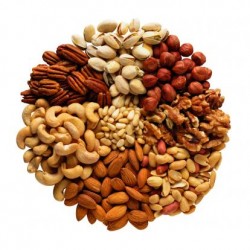
When it comes to healthy snacks, it’s difficult to find a better option than nuts. While they may be small, a handful of nuts is densely packed with nutrition, including healthy fats, protein, and fiber. Nuts are a quality source of vitamin B9 (folate), antioxidants, and several important minerals, including calcium, magnesium, and potassium. At the end of this blog post, I’ve included a few tables comparing the nutrient composition of various types of nuts.
...
February 12, 2018
Alex Speers ND, MS
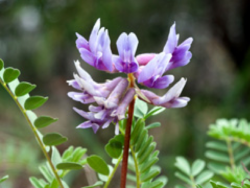
Astragalus, known as Huáng Qí in Chinese, is a flowering plant that is native to parts of China, Mongolia, and Korea. Astragalus has a long history of use in Chinese medicine for a variety of ailments and has increasingly been used in the West for its immune-stimulating effects. In the world of oncology, Astragalus is unique in that it is perhaps one of our most well-studied herbs, specifically for lung cancer.
Lung cancer is the most common cause of ...
January 17, 2018
Alex Speers ND, MS
Living in Portland, Oregon, where the winters are filled with overcast skies and a steady supply of rain, the use of “happy lights,” also known as bright light therapy, is a common way to help fight the winter blues. Bright light therapy typically involves sitting in front of a light box for 30 minutes every morning for an extended period of time. Light boxes provide 2,500-10,000 lux (a unit of measurement for light intensity); in comparison, a bright sunny ...
December 21, 2017
Alex Speers ND, MS
Within the field of integrative oncology, one of the most common concerns expressed by patients and their oncologists is the potential for interactions between nutritional supplements and chemotherapy drugs. These concerns are typically based on the knowledge that certain supplements and chemotherapy drugs share metabolic pathways. This can be a problem because if a supplement slows down a drug’s metabolism, more of the drug is available, potentially causing more ...
December 1, 2017
Alex Speers ND, MS
In an earlier blog post, we discussed a study where nighttime exposure to dim light completely shut down melatonin production in mice with breast tumors and was associated with increased resistance to the breast cancer drug tamoxifen. Today, we continue our discussion of melatonin, but this time with humans! Specifically, we’ll discuss the safety and effectiveness of using melatonin alongside chemotherapy in cases of advanced cancer. But first, a quick review of melatonin.
Melaton...
November 17, 2017
Alex Speers ND, MS
Honokiol is a plant compound found in the stem and bark of Magnolia officinalis, a tree native to China that has a long history of use in traditional Chinese medicine. Honokiol has recently become popular as an anti-cancer supplement based on several cell and animal studies that have shown positive effects of honokiol against a wide range of cancer types. For example, in one animal study, mice with lung cancer were given either radiation alone or radiation with honokiol. ...
November 10, 2017
Alex Speers ND, MS
Within a single tumor, there are a variety of different cell types. One type, called cancer stem cells, or CSCs, are unique because when they divide, they can produce a variety of different cell types in addition to producing more stem cells. This is important because it means that if CSCs are present within a tumor, that tumor has a potential source for any cell type it needs to sustain itself and grow.
Now consider what happens when we try to kill a growing tumor. ...
November 3, 2017
Alex Speers ND, MS
When we sleep, our pineal gland, located near the center of our brain, produces the hormone melatonin. Melatonin helps to regulate our sleep-wake cycle, reaching its highest levels between midnight and 8:00 am and dropping to undetectable levels during the day. Melatonin’s sedative effect is well-known and it has become a popular supplement for those with insomnia. Recent research has shown that melatonin also has antioxidant, anti-inflammatory, and immune-stimulating ...
October 27, 2017
Alex Speers ND, MS
Vascular Endothelial Growth Factor, commonly referred to as VEGF, is a protein that plays an important role in the formation of new blood vessels, a process called angiogenesis. There are many times in our life when angiogenesis is a completely normal and necessary function, such as in wound healing when VEGF stimulates angiogenesis to replace damaged blood vessels and to bring oxygen and nutrients to the wound. In the setting of cancer, however, VEGF becomes a dangerous ...
April 18, 2014
Fasting is emerging as a powerful tool against cancer. Fasting has been around for millenia and many cultures and traditions revere it for purifying and cleansing the body. Cancer, on the other hand, is a disease of over-abundance and excess and epidemic in western societies. It makes logical sense that fasting would be useful in cancer fighting and modern science is just starting to catch up with what ancient traditions have known since for eons.
Cancer is a disease of ...
February 7, 2014
Glutamine is a basic building block of cells and tissue. It is an amino acid that is found abundantly in our bodies and supplied, when under normal conditions, adequately by a balanced diet. Glutamine is to cellular health as bricks are to a chimney – critical and fundamental.
So why discuss something so basic? When the body is under the stress of chemotherapy, radiation or after major surgery, glutamine becomes a “conditionally essential” amino acid. In short, ...
January 10, 2014
New research has been published showing fish oils are particularly helpful for the most deadly form of breast cancer, triple negative breast cancer. This further adds to the argument for use of fish oils in breast cancer treatment. Please see my previous post, Omega-3 Fatty Acids and Breast Cancer, for a an overview. The words below are not my own, but state easily what this new research is expressing. It's important to note that the research is still being done in a lab with cells, ...
|